
Electrical Repair and Troubleshooting
Find and fix flickering lights, dead outlets and tripping circuits.
Learn more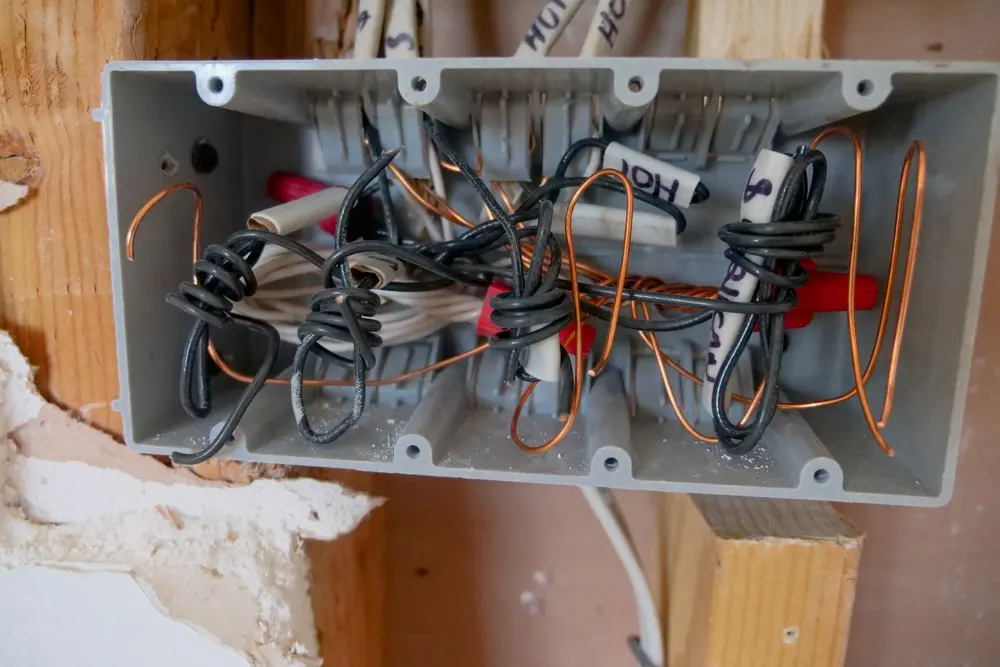
Outdated or damaged wiring is a hidden risk in older homes. We assess what you have and replace what is unsafe, in a plan that fits your house.
Rewiring means replacing the wiring that runs through your walls, ceilings and attic, not just the outlets on the surface. It is a bigger project than most electrical work, and people only take it on when the existing wiring can no longer be trusted: insulation that has dried and cracked, connections that have failed, or a layout that cannot carry the loads of a modern household.
Older homes in Terrell and across Kaufman County are the usual candidates. Houses built before the 1950s may still have cloth-covered or knob-and-tube wiring. Homes from the 1960s and 70s may have aluminum branch wiring, which expands and loosens at connections differently than copper. Neither type is automatically an emergency, but both deserve an honest inspection before more load is added to them.
Rewiring does not have to be all-or-nothing. A house can be rewired in sections, such as the kitchen and bath first, or the circuits that feed a new addition, and some problem areas can be repaired without touching the rest. We look at what is actually in your walls, then lay out the options so you can decide how far to go.
Rewiring is one of the more variable electrical jobs, so we do not give a price without seeing the house. These are the factors that move it most.
More square footage means more wire, more devices and more circuits.
Open attics and crawlspaces make runs easier. Finished walls, plaster or masonry take more time.
A few circuits cost far less than a whole house, and phasing spreads cost over time.
Opening walls to run wire leaves drywall and paint repair, which may be separate from the electrical quote.
Older housing is common in Dallas neighborhoods and in the established parts of Terrell and Kaufman, and those are the homes where rewiring questions come up most.
The age of the house is a clue, and the wire insulation in the attic or at the panel often tells the rest. Cloth covering suggests very old wiring, while a silver-colored conductor at outlets may be aluminum. An electrician can confirm.
It is not automatically unsafe, but it has no ground wire, its insulation ages, and it was never meant to carry modern loads. It also can be overlapped by insulation or spliced badly over the years, so it deserves an inspection.
Yes. Rewiring can be done in sections, such as the circuits to a kitchen or addition, as long as the new and old wiring are connected correctly and the panel can support them.
Many projects can be done while you live there, with power off to certain circuits during the day. A full rewire may be more disruptive, and we will discuss timing and power with you when we plan.
Some insurers ask about the age and type of wiring, especially for aluminum or knob-and-tube. Check with your insurance company, and ask us for a written description of what is in your house.
Find and fix flickering lights, dead outlets and tripping circuits.
Learn more
Replace worn or tripping breakers with the right match for your panel.
Learn more
Tell us about the house and what you are seeing, and we will explain your options.
(214) 586-9425